Facebook Lead Ads for Contractors: How to Turn Clicks Into Calls
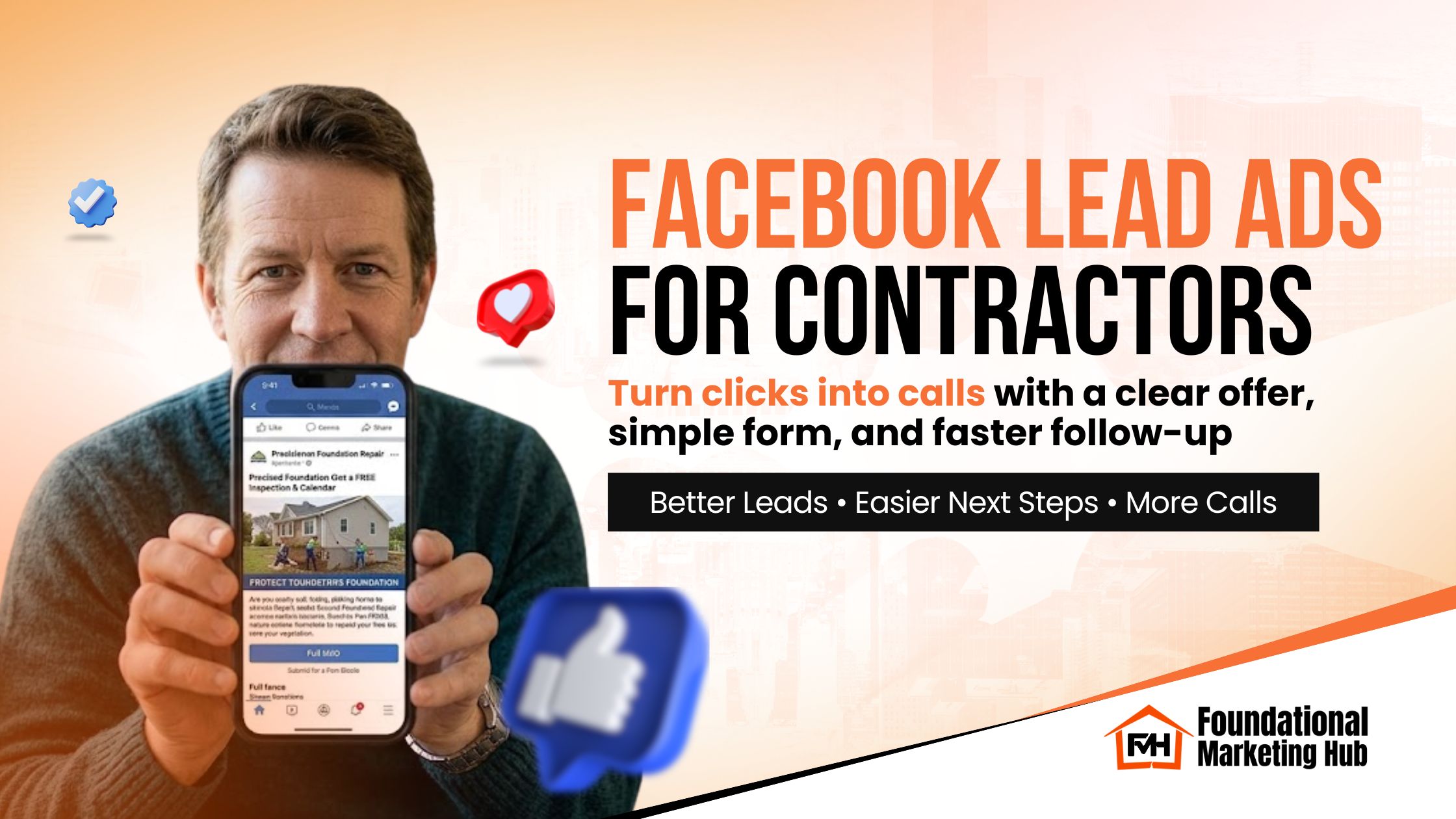
Facebook lead ads can help contractors turn interest into real calls when the message is clear, the offer is simple, and the follow-up happens fast. For foundation repair and basement waterproofing companies, that matters because most ad problems do not start with the click. They start after the click, when the lead sits too long, the next step feels unclear, or the homeowner loses trust. Facebook lead ads can work for contractors because they make it easier for homeowners to ask for help without leaving the app. However, the ads only produce calls when the offer is clear, the form is simple, and the follow-up is fast. In other words, the ad opens the door, but your process is what gets the call.
Why This Matters for Contractors
Foundation repair and basement waterproofing are not impulse services. Homeowners usually reach out because they have a real problem. They may be dealing with a wet basement, wall cracks, bowing walls, standing water, or a crawl space issue they do not understand. As a result, they are not looking for entertainment. They are looking for clarity and a company they can trust.
That is why the wrong ad can waste money quickly. A vague message brings weak interest. A slow response loses the lead. A confusing next step pushes the homeowner toward another company.
So, if you want better results, you should not ask only whether Facebook lead ads work. Instead, ask whether your ad helps the right homeowner take the next step with confidence.
What Facebook Lead Ads Actually Do
Facebook lead ads let someone submit their contact information without leaving Facebook. That sounds simple, and it is. Still, the result depends on what happens before and after the form. If you want the official platform overview, Meta explains the format in its lead ads guide.
For example, a homeowner might see an ad about basement waterproofing, tap it, answer a few short questions, and request an inspection. That sounds like progress. However, if your team replies six hours later, the lead may already be talking to someone else.
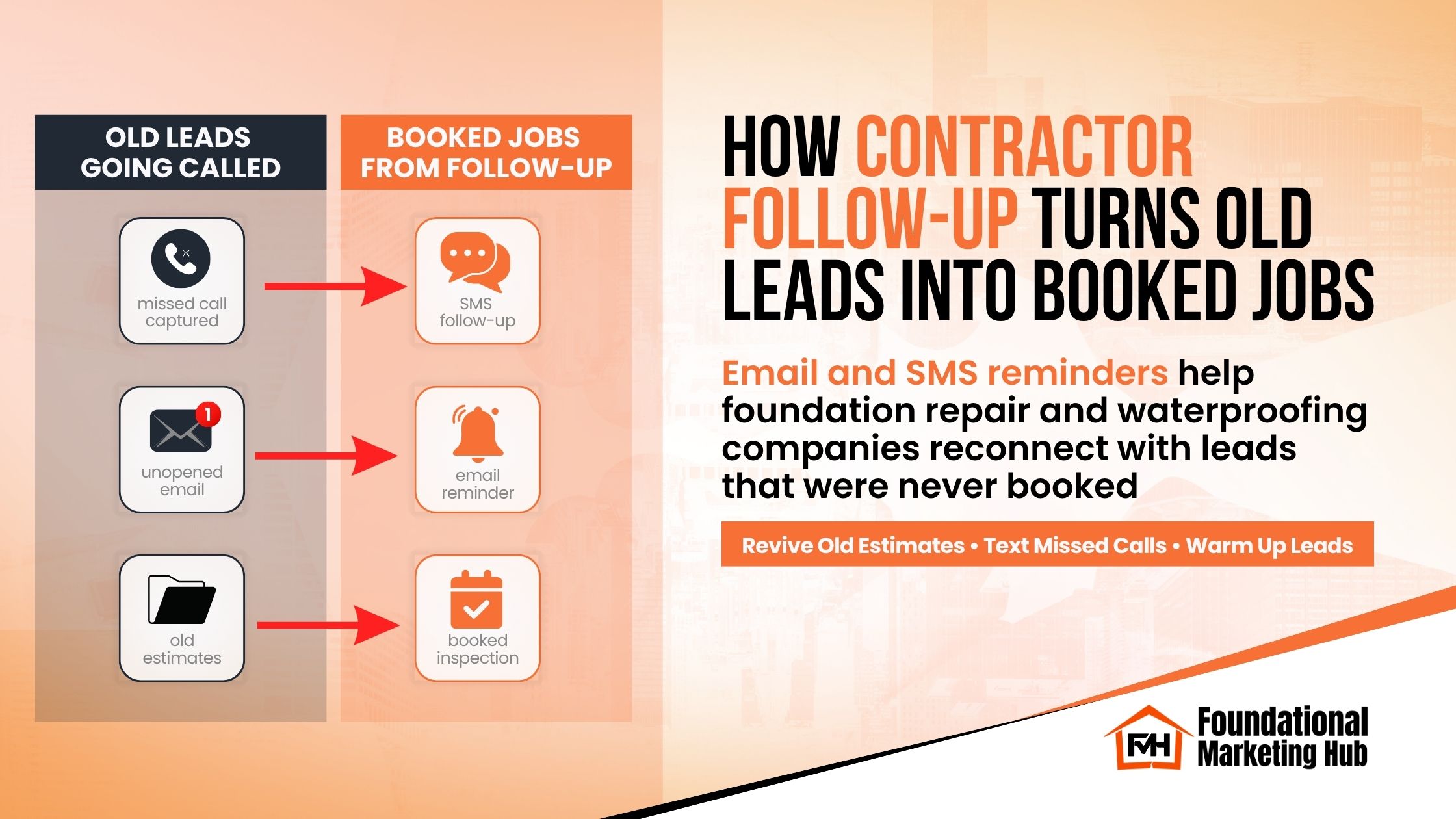
Therefore, the ad itself is only one part of the job. The message has to attract the right person. Then, the form has to make sense. After that, the response has to happen fast enough to keep the lead warm. That is also why a stronger email and SMS follow-up system can make such a big difference after the form comes in.
Why Facebook Lead Ads Fit Foundation Repair and Basement Waterproofing
Not every business needs the same kind of ad. However, Facebook lead ads can fit foundation repair and basement waterproofing companies for a few clear reasons.
First, many homeowners are not ready to make a call the second they see your ad. They may want a lower-pressure first step. A simple form gives them that.
Second, these services usually need trust before action. A strong ad can show proof, explain the problem clearly, and give the homeowner a reason to respond.
Third, service-based companies often need a faster path from interest to contact. Since Facebook lead ads keep the process short, they can remove extra friction.
Even so, they work best when you stay realistic. The goal is not random leads. The goal is better-fit homeowners who are more likely to move toward a call, an inspection, or an estimate. That is exactly where a focused PPC strategy for foundation repair and waterproofing contractors becomes more useful than broad, generic ad management.
The Real Problem Is Usually Not the Ad
A lot of contractors assume the ad is the problem when the results feel weak. Sometimes that is true. More often, the real leak is somewhere else.
For example, you might have:
That is why some ads get clicks but do not create calls. The click is not the finish line. It is only the start.
This is also why lead generation for small businesses can feel frustrating. Owners think they need more traffic, more budget, or more reach. In reality, they often need a better path from first interest to actual conversation. If you want a broader overview of how that process works, HubSpot has a helpful lead generation guide.
How to Get Better Leads From Facebook
Many owners ask how to get leads from Facebook, but that is not the full question. A better question is this: how do you get better leads from Facebook?
The answer starts with fit.
Your ad should speak to a real problem that the homeowner already feels. For example:
When the ad speaks to the real issue, the lead quality usually improves. By contrast, broad ads often pull in curious people who are not serious.
Next, the offer has to make sense. Most homeowners do not want a confusing form or a hard sell. They want a simple next step, such as:
Then, the questions should stay simple. Ask only what helps your team respond well. For example, you can ask:
That is enough to give your team better context without making the homeowner do too much work.
What a Strong Facebook Lead Ad Looks Like
A strong ad is clear before it is clever. It should make the homeowner feel understood. Then, it should make the next step feel easy.
Here is what a better ad usually includes:
Email can also support bigger campaigns. For example, if a contractor is running foundation repair PPC advertising, email follow-up can help make sure paid leads do not disappear after the first call or form submission.
Why Local Message Match Matters
Local advertising for small businesses works better when the ad feels tied to the area and the service. Homeowners want to know that you do this work and that you do it near them.
That does not mean stuffing city names into every line. Instead, it means making your message feel relevant.
For example, a stronger ad might mention:
As a result, the ad feels more real. It also helps the homeowner believe they are not clicking into a generic company that serves everyone and no one. The same idea carries into your website, which is why a better contractor web design setup matters after the click. It also helps to understand Google’s own local ranking guidance, since trust, relevance, and business clarity affect how homeowners judge you online.
Why Good Ads Still Fail
Even good ads can fail when the system behind them is weak. This is where many contractors lose the lead.
Here are the most common reasons:
So, while online ads for small businesses can create opportunity, they only create revenue when the business handles the lead well after it comes in.
What to Fix First If Your Ads Are Not Turning Into Calls
If your ads are not producing enough calls, fix these areas first:
So, while online ads for small businesses can create opportunity, they only create revenue when the business handles the lead well after it comes in.
A Simple Way to Think About Facebook Lead Ads
The easiest way to think about Facebook lead ads is this:
Ad → Form → Follow-up → Call
If any part of that chain is weak, the results drop.
The ad gets attention.
The form collects the lead.
The follow-up keeps the lead warm.
The call turns interest into a real opportunity.
That is why the platform is not the full strategy. The system behind the lead matters just as much.
So, while online ads for small businesses can create opportunity, they only create revenue when the business handles the lead well after it comes in.
Are Facebook Lead Ads Better Than Other Options?
Not always. However, they can be a strong option when you want a fast, simple way for homeowners to raise their hand.
For some companies, Facebook lead ads work well because:
- the homeowner does not need to leave the app
- the offer feels easy to accept
- the business can respond quickly
- the message can be built around visible homeowner pain
On the other hand, they may feel weaker when:
- the follow-up is slow
- the team wants only very high-intent calls
- the ad message is too broad
- there is no strong trust signal
So, the better question is not whether Facebook lead ads are always better. The real question is whether your company can support them with the right process. If you are comparing options, this internal breakdown of Google vs Meta for foundation leads can help frame that decision.
So, while online ads for small businesses can create opportunity, they only create revenue when the business handles the lead well after it comes in.
Common Mistakes Contractors Make With Facebook Lead Ads
Before you put more money into ads, watch for these mistakes:
So, while online ads for small businesses can create opportunity, they only create revenue when the business handles the lead well after it comes in.
Fortunately, these are fixable problems. In most cases, better lead quality comes from clearer ads, simpler forms, and faster follow-up.