Most homeowners don’t book a foundation inspection the first time they see your ad. They notice a crack, scroll past, worry about it for a week, and then look again. A Facebook ads funnel is how you stay in front of them during that week, so when they’re ready to call, they call you.
This guide covers how to build that funnel for a foundation repair or basement waterproofing company: who to target, what to offer, how to retarget, how to track booked inspections, and how much to spend. It’s written for owners who want ads measured in jobs, not likes.
How the funnel works for foundation repair
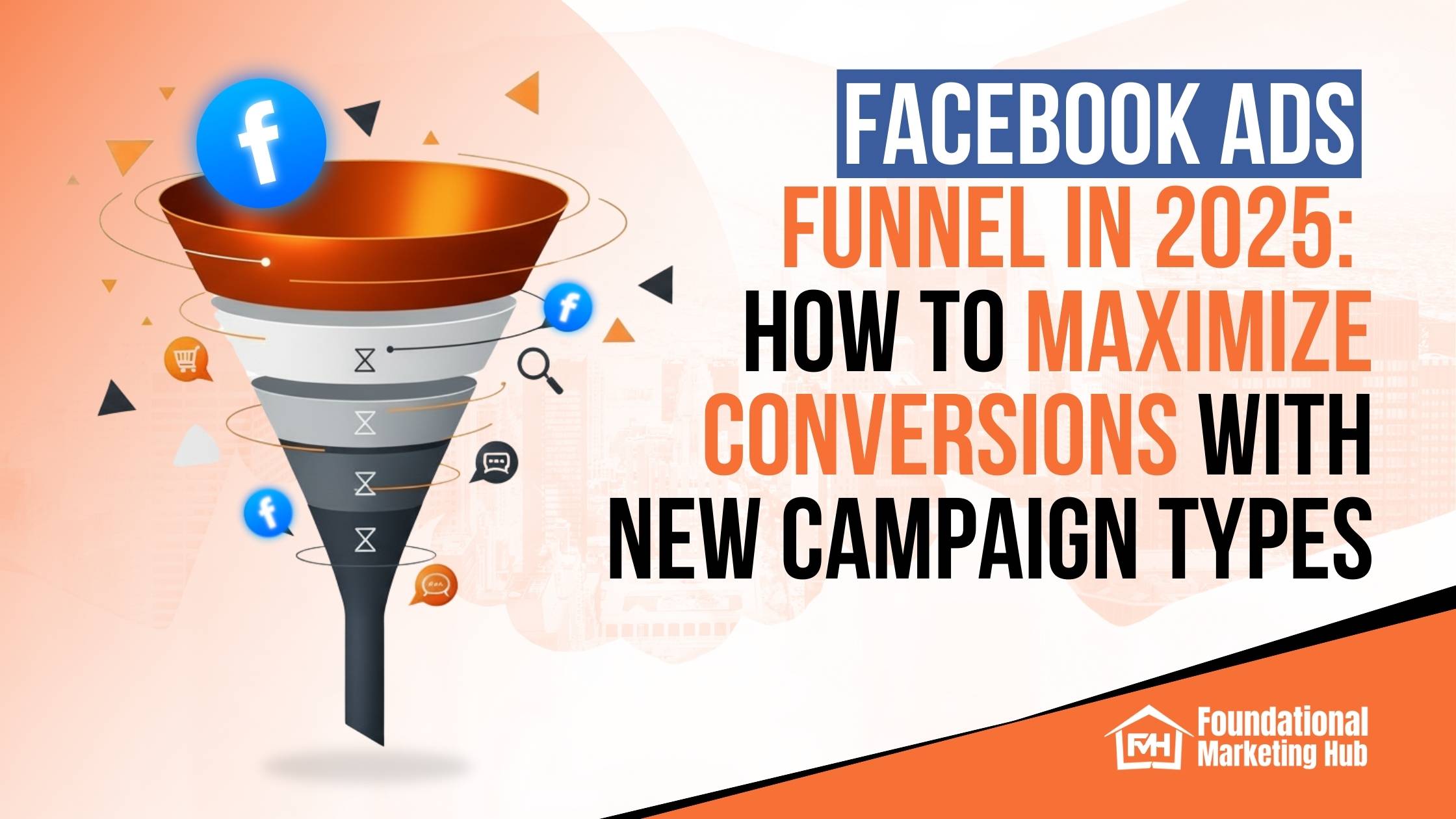
A foundation repair funnel has three stages. Each one gets its own audience, message and goal.
| Stage | Who they are | What they see | Goal |
|---|---|---|---|
| Cold | Homeowners in your service area who don’t know you | Short videos and photos of real cracks, bowing walls and wet basements, with a clear warning sign to look for | Video views and page visits |
| Warm | People who watched your videos, visited your site or engaged with your page | Before-and-after projects, homeowner testimonials, your warranty | Clicks to your inspection page |
| Hot | People who visited your inspection or contact page but didn’t book | A direct free-inspection offer, a reason to act now, your phone number | Booked inspections and calls |
Most of your booked inspections will come from the warm and hot stages. Cold ads fill the funnel so those stages have people to retarget.
Step 1: Set goals and KPIs before you spend
Pick one main goal per campaign: booked inspections, inbound calls or online quote requests. Then track the numbers that tie ad spend to revenue.
| KPI | What it tells you |
|---|---|
| Cost per lead | What you pay for each form fill or call |
| Cost per booked inspection | What you pay to get someone on the calendar |
| Inspection-to-job rate | How many inspections turn into signed work |
| Cost per job | Ad spend divided by jobs closed |
| Return on ad spend (ROAS) | Revenue from ad-sourced jobs divided by ad spend |
Likes, reach and comments are useful signals, but they don’t pay for crews. Judge every campaign on cost per booked inspection and cost per job.
Step 2: Target the right homeowners
Foundation repair is local and high-ticket, so tight targeting matters more than reach.
- Service area by zip code. Target the zip codes your crews actually serve. Weight your budget toward areas with older homes and the soil or water problems your company fixes most.
- Custom audiences. Upload past customer and lead lists so you can exclude existing customers and retarget old leads who never booked.
- Lookalike audiences. Build lookalikes from customers who signed jobs, not from everyone who filled out a form.
- Website and video audiences. Install the Meta Pixel and the Conversions API so you can retarget site visitors and video viewers. These become your warm and hot audiences.
Don’t stack too many filters on a small service area. Narrow audiences get expensive fast, and Meta’s delivery works better with room to find buyers inside your zip codes.
Step 3: Use offers and creative that book inspections
Homeowners worry about cost, being upsold and whether the problem is serious. Your offer and creative should answer those worries.
Offers that convert:
- Free inspection. Lowers the barrier for skeptical homeowners and gives you a reason to be in the home.
- Seasonal timing. Spring water problems and winter freeze cycles give you natural, honest reasons to act now.
- Strong guarantees. A transferable or lifetime warranty reassures people spending thousands on a repair.
Creative that works:
- Real photos and phone video from your own jobs. Polished stock footage reads like an ad; a crew member pointing at a stair-step crack reads like help.
- Before-and-after carousels that walk through one project.
- Short homeowner testimonial videos.
- One clear warning sign per ad, such as “doors that stick” or “water along the cove joint.”
Test with the 3-2-2 method: three creatives, two audiences, two offers. Keep the winners and cut the rest every few weeks so ads don’t go stale.
Step 4: Retarget with manual campaigns, Advantage+, or both
Retargeting is where a foundation repair funnel earns its money. You have two main ways to set it up.
| Manual (split) campaigns | Advantage+ campaigns | |
|---|---|---|
| How it works | Separate ad sets for cold, warm and hot audiences, each with its own creative | Meta’s automation decides who sees which ad and moves budget on its own |
| Control | High: you choose the message for each stage | Low: Meta chooses |
| Best for | Most local contractors, especially with small budgets and one service area | Larger budgets, several markets, and enough conversions for the system to learn |
| Watch out for | More setup and more ad sets to manage | Spend drifting to people who already know you, which can look better than it is |
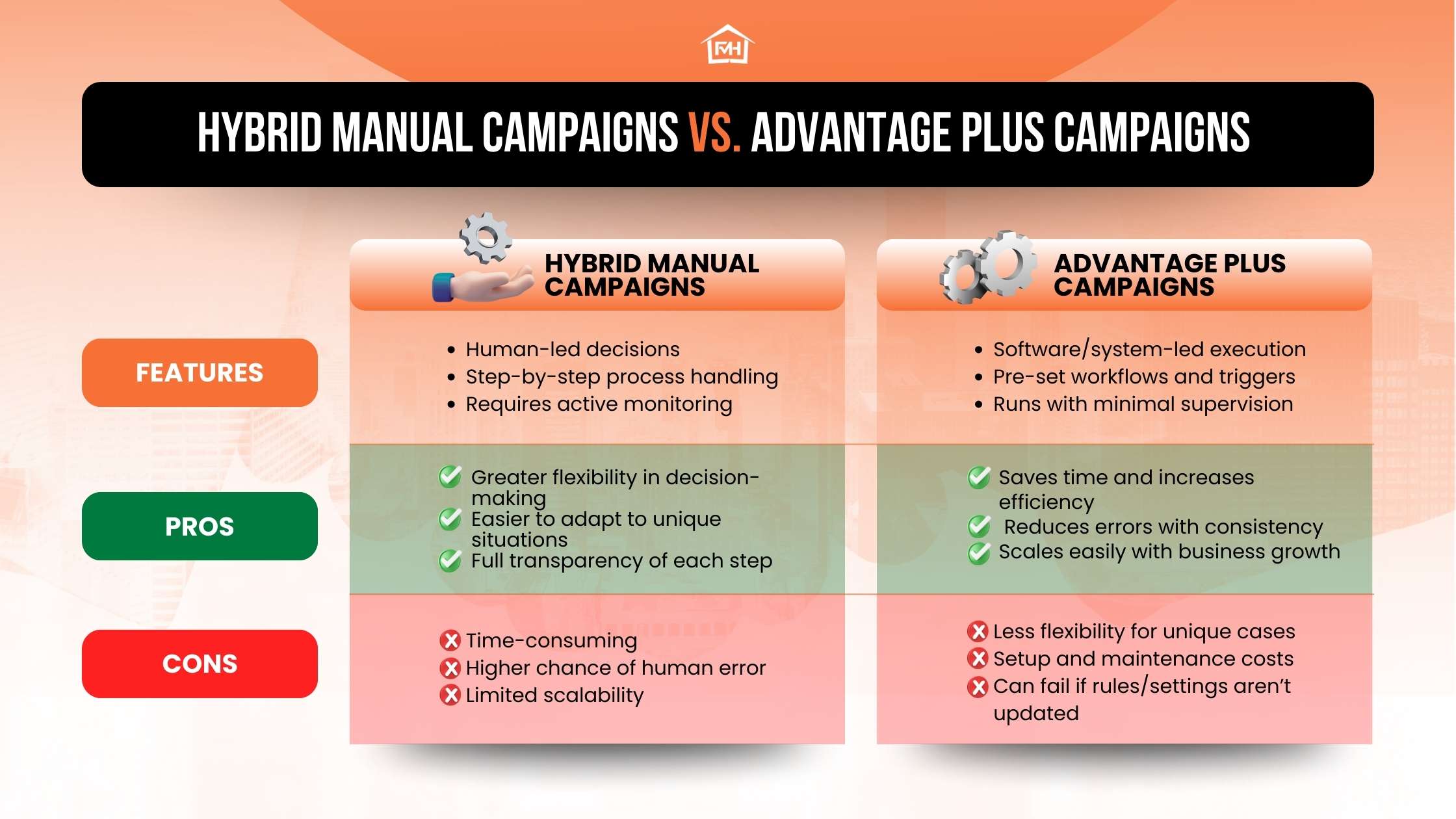
Most foundation repair companies should start with manual campaigns so each stage gets the right message. Once you have steady conversion data, test an Advantage+ campaign against your manual setup and keep whichever produces cheaper booked inspections.
A few retargeting rules that hold either way:
- Exclude people who already booked or became customers.
- Retarget inspection-page visitors for 7 to 14 days with a direct offer, and video viewers for 30 to 60 days with proof and education.
- Change creative before frequency gets high enough that the same people tune it out.
Step 5: Send clicks to a landing page, not your homepage
A homepage gives people ten places to click. A landing page gives them one: book the inspection.
A high-converting foundation repair landing page has:
- A headline that matches the ad the person clicked
- A short form (name, phone, address, problem) and a tap-to-call button
- Photos from your real jobs and two or three homeowner reviews
- Your warranty, licensing and service area
- One call to action, such as “Request a Free Inspection Today”
For a full checklist, see our guide to landing pages for foundation repair.
Step 6: Track booked inspections, not just leads
Facebook’s own reporting often misses conversions, especially phone calls and leads that book days later. If you only trust Ads Manager, you may turn off campaigns that are working.
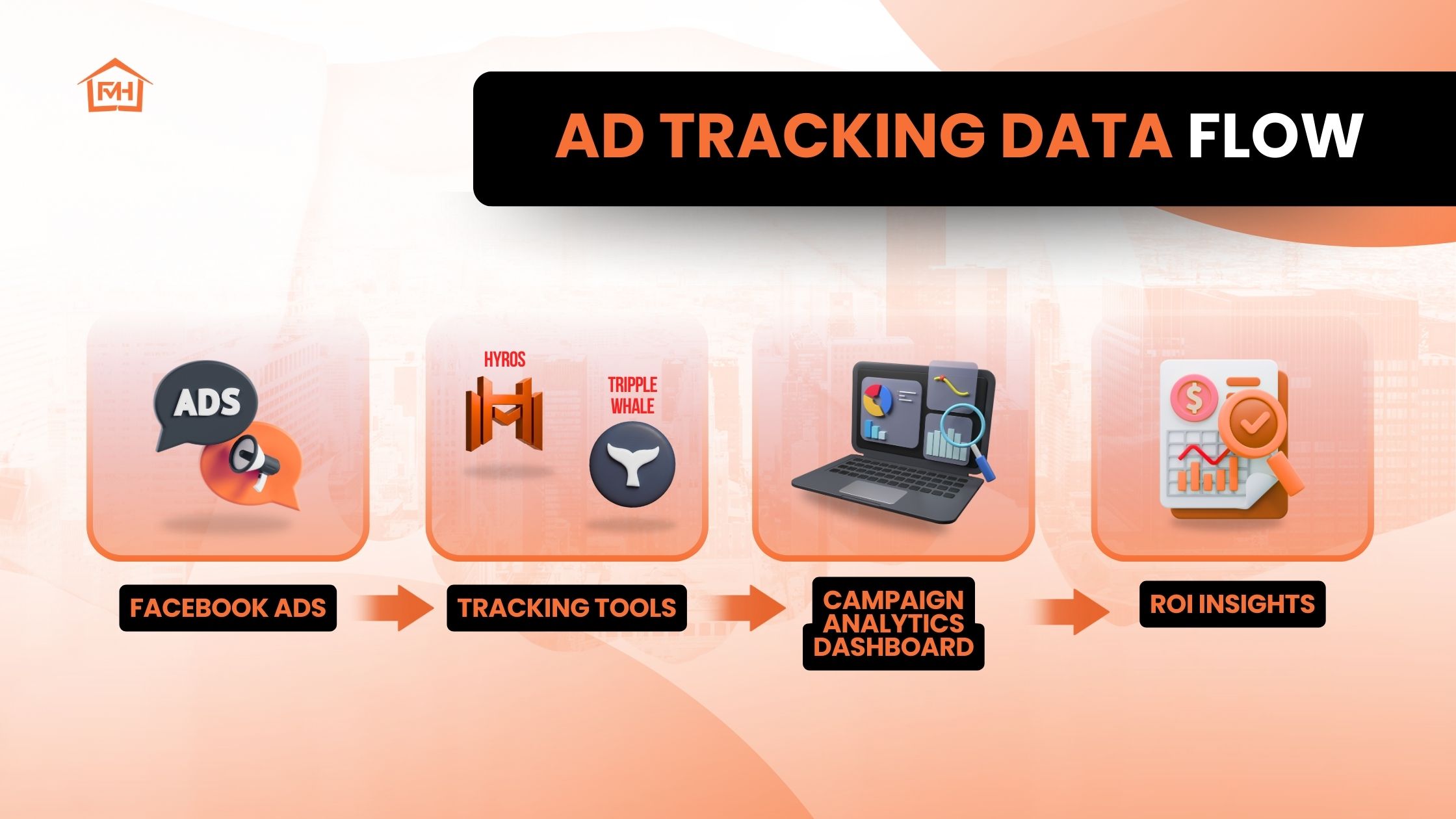
To see what your ads really produce:
- Set up the Meta Pixel and Conversions API so form fills are reported back to Meta.
- Use call tracking numbers on your ads and landing pages.
- Pass every lead into your CRM with its source, then mark which ones booked an inspection and which signed a job.
- Review cost per booked inspection and cost per job every week, not just cost per lead.
When your CRM shows which ads lead to signed jobs, you can move budget to them with confidence.
Step 7: Set a budget and scale what works
- Start small. Spend $20 to $50 a day while you test creatives and audiences.
- Give it time. Let each test run long enough to produce booked inspections, not just clicks, before you judge it.
- Use the 80/20 rule. Put about 80% of the budget into proven ad sets and 20% into new tests.
- Scale gradually. Raise the budget on a winner in steps rather than doubling it overnight, which can reset Meta’s learning.
The math is usually on your side. If $500 in ad spend books a $5,000 repair, that is a 10x return, so even a few closed jobs a month can make the funnel profitable.
Common mistakes to avoid
- Boosting random posts. A boost goes to whoever is cheapest to reach, not to homeowners ready to book.
- Sending traffic to the homepage. Use a landing page with one action.
- Skipping retargeting. Most of your bookings come from people who have already seen you.
- Letting ads run too long. Refresh creative before your audience tunes it out.
- Chasing vanity metrics. Judge ads on booked inspections and jobs, not likes.
Frequently asked questions
Do Facebook ads work for foundation repair companies?
Yes, when they are built as a funnel. Cold ads build awareness in your service area, and retargeting turns that awareness into booked inspections. Single boosted posts rarely produce jobs.
How much should a foundation repair company spend on Facebook ads?
Start at $20 to $50 a day to test, then scale the ad sets that produce booked inspections at a cost your close rate can support.
What is a good return on Facebook ads for contractors?
A return of at least 3 to 5 times ad spend is a common target. Because foundation repairs are high-ticket, one closed job can cover a month of ads.
What is the 3-2-2 method?
It means testing three creatives across two audiences with two offers. For example: a before-and-after photo, a testimonial video and a seasonal ad, shown to a zip-code audience and a lookalike audience, with a free-inspection offer and a warranty offer.
Should I use Advantage+ or manual campaigns?
Start with manual campaigns so each funnel stage gets the right message. Test Advantage+ once you have steady conversions, and keep whichever books inspections for less.
Want a funnel that books inspections?
Foundational Marketing Hub builds and manages Facebook and Google ads for foundation repair and waterproofing companies, tracked all the way to signed jobs. Schedule a discovery call and we’ll show you what your market can support.
Related reading: