How to Get Content Cited in Google AI Overviews: Local Contractor Guide
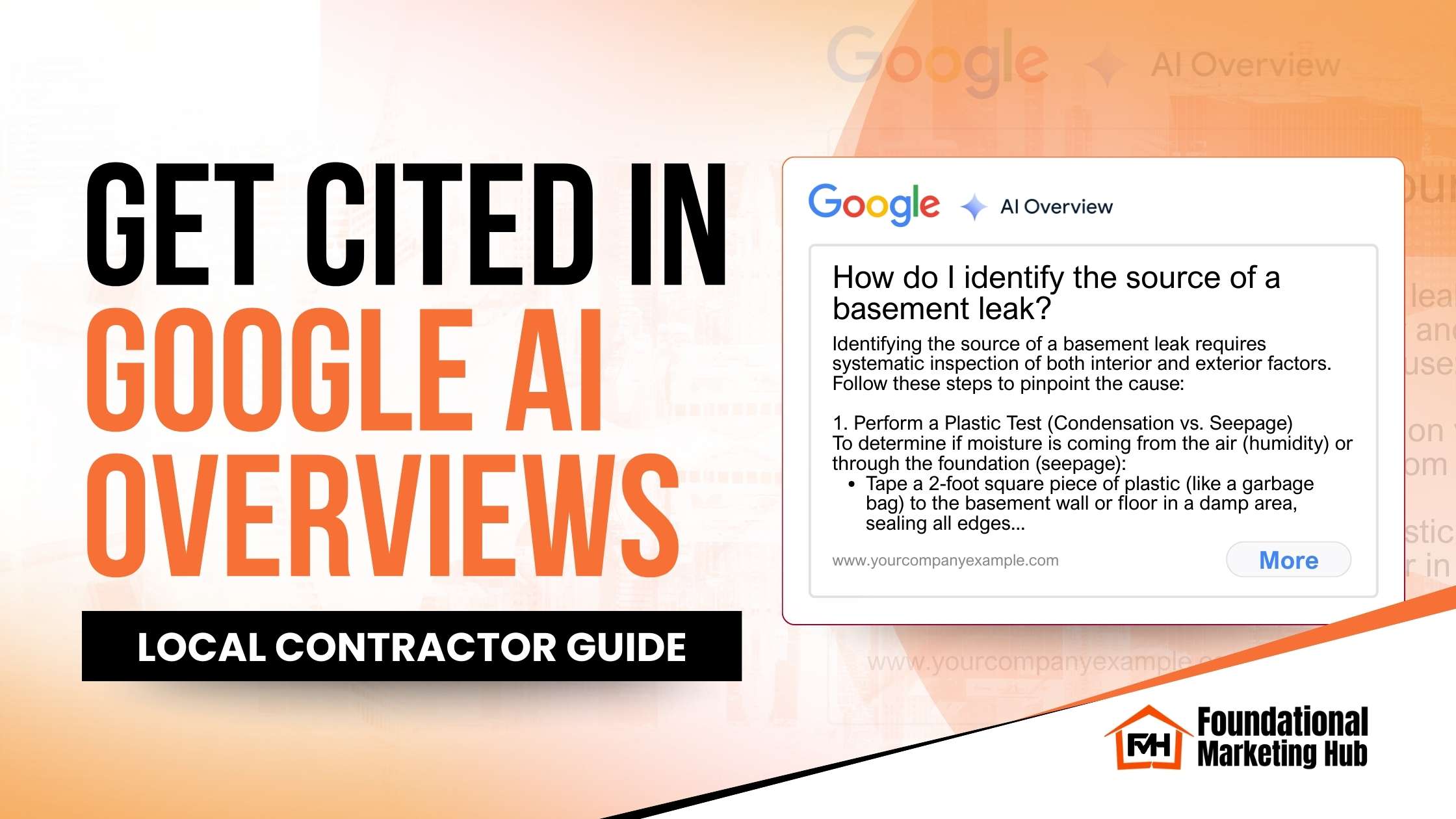
Start with publishing the clearest, most trustworthy answer to a specific homeowner question, then structuring that answer so Google can easily extract and reference it. For local contractors, this is the 2026 shift: you are not only competing for rankings, you are competing to be the source AI chooses to cite.
If you serve foundation repair or basement waterproofing homeowners, this guide shows how to combine on-page SEO with AI-friendly content structure (GEO-style) so your pages are easier to understand, easier to extract, and more likely to be cited.
What Google AI Overviews look for in a source
AI Overviews tend to cite pages that make it easy to answer the searcher quickly and confidently. Your content is more “citable” when it checks these boxes:
If you want a broader marketing foundation to support this, start with Foundation Repair Marketing Strategies, then come back to this AI Overviews playbook.
SEO still matters, but it has to be “AI-readable” now
GEO does not replace SEO. It upgrades it.
If you are doing foundation repair SEO or basement waterproofing SEO, you still need the basics dialed in so Google can find and understand your pages. That is where a strong SEO service framework matters, because technical hygiene and on-page structure are what make citations possible in the first place.
This is the difference in 2026:
Step-by-step: How to get content cited in Google AI Overviews
Step 1: Pick one “overview-friendly” question per page
Choose a single homeowner question and build the page to be the best answer.
Examples for local contractors:
If you need a strong starting point for traditional optimization before layering in GEO, reference Optimize Foundation Repair SEO for 2025 and apply the same fundamentals to your 2026 AI visibility plan.
Step 2: Use the answer-first (inverted pyramid) structure
To get cited, you cannot bury the answer halfway down the page.
Use this structure:
- 1
Answer (1–3 sentences)
- 2
Why it happens (short explanation)
- 3
Options (bullets, pros/cons, or a table)
- 4
Steps (numbered list)
- 5
When to call a pro (bullets)
- 6
FAQ (PAA-style questions)
This makes your page readable for homeowners and easy for AI systems to quote accurately.
Step 3: Add citation-ready blocks AI can pull cleanly
Add sections that are easy to extract:
- 1
Quick Answer (1–2 sentences)
- 2
Key takeaways (3–6 bullets)
- 3
Step-by-step (numbered list)
- 4
Pros/cons (bullets)
- 5
Comparison table (simple and scannable)
- 6
FAQ (questions as headings, short answers first)
Also make sure the page converts when you do get the click. This is where landing page structure matters, especially for local lead gen. Use Foundation Repair Landing Page Optimization as your reference for turning AI visibility into booked calls.
Step 4: Implement schema that matches the page
Schema does not guarantee citations, but it improves clarity and consistency.
Use these when relevant:
- 1
LocalBusiness (site-wide, your brand entity)
- 2
Service (service pages)
- 3
Article / BlogPosting (blog content)
- 4
FAQPage (if you include Q&A)
- 5
HowTo (if you provide true step-by-step instructions)
If you want a niche-specific breakdown of geo-targeting and structured optimization, tie this into Advanced GEO-Targeted SEO for Foundation Repair.
Step 5: Build a “People Also Ask” style FAQ section
A strong FAQ is a shortcut to being cited because it creates clean Q&A blocks that AI can lift without guessing.
Best practices:
- 1
Use real questions as headings (H3)
- 2
Answer each in 1–2 sentences immediately
- 3
Add 2–4 more sentences after for clarity
- 4
Keep answers factual and specific
- 5
Link to deeper pages when relevant
Step 6: Strengthen trust signals with proof
Local contractors win trust with specifics. Add:
This is one of the biggest gaps most site owners miss, even when they hire a foundation repair SEO company. Great content does not earn citations if the site does not look legitimate and consistent.
Step 7: Build topical authority with a simple content cluster
Instead of one isolated post, build clusters that reinforce your expertise.
Foundation Repair Cluster
- common crack types and what they mean
- settlement causes
- repair options explained
- drainage and grading impacts
Basement Waterproofing Cluster
- interior vs exterior systems
- sump pump basics
- hydrostatic pressure explained
- moisture control and ventilation
Then interlink:
- blogs → service pages
- service pages → supporting blogs
- related blogs → each other
This supports both seo for foundation repair company growth and seo for basement waterproofing company visibility because it turns your site into an organized knowledge base, not a collection of random pages.
AI-friendly copywriting tips for service pages and blogs
If your writing sounds like it was made to be quoted, you are on the right track.
This approach helps whether you are improving basement waterproofing SEO, upgrading foundation repair SEO, or building pages a foundation repair SEO company would be proud to publish.
GEO + on-page SEO checklist (copy/paste)
Use this before publishing any page you want cited:
Your AI Overview Game Plan
If you want to win in 2026, treat GEO as the layer on top of SEO: best answer, best structure, best trust. When you publish pages built this way consistently, you increase the chances of earning rankings and getting cited.
If you want help implementing this across your site, start by tightening your foundation with How to Rank in Google Map Pack, then apply the AI citation structure to your highest-intent service pages.
Book a free 15-minute Discovery Call and we’ll help you pinpoint what to fix first to get cited in AI Overviews and generate more leads.
On the call, we’ll cover: